
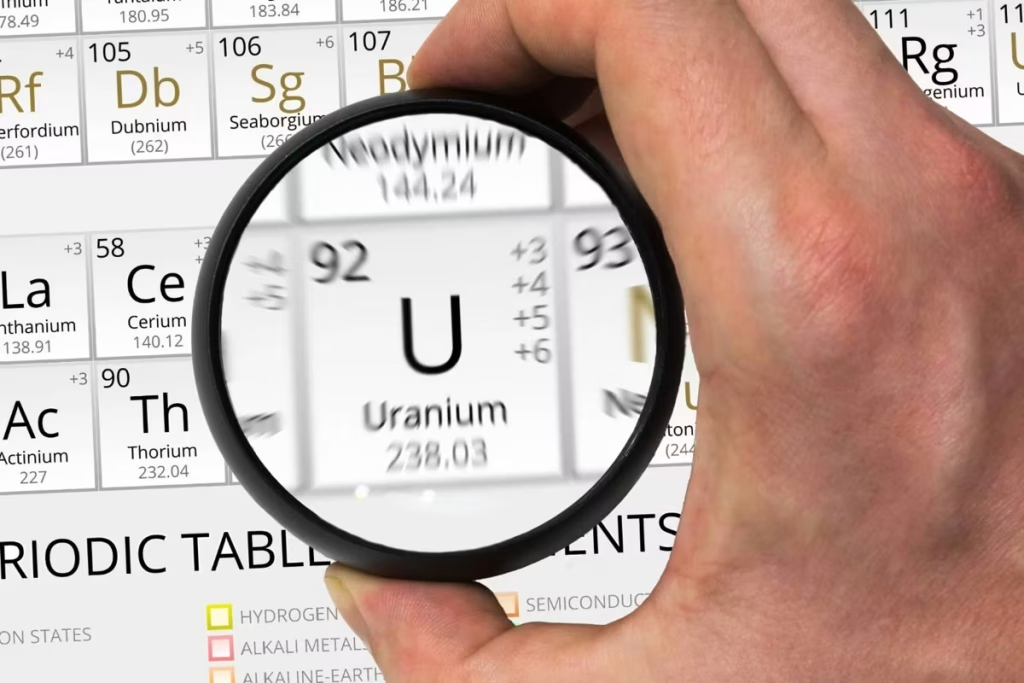
A new report is raising serious questions about the global nuclear supply chain after researchers revealed that massive quantities of undeclared uranium have been quietly leaving the Democratic Republic of the Congo embedded in cobalt exports for more than two decades. The study, published in the journal Nature Communications by a team from the University of Wisconsin–Madison and Princeton University, estimates that between 2,000 and 5,000 metric tons of natural uranium were shipped out of the DRC between 2000 and 2024 tucked inside cobalt-hydroxide cargoes. Fewer than 10 percent of those shipments were ever reported to the International Atomic Energy Agency, despite the DRC having officially reported zero uranium production for decades.
Nuclear security expert Sébastien Philippe, who co-authored the study, told Newswise that the missing uranium represents an alarming blind spot in international oversight. The quantities involved are enough to produce fissile material for roughly 600 to 1,500 nuclear weapons or to fuel a standard light-water reactor for up to 25 years. Philippe noted that because the material is entirely off the books, there is no way to track where it ends up or whether it is being diverted into a military program rather than a civilian energy initiative.
The problem stems from geology. In the DRC’s Copperbelt region, which supplies most of the world’s cobalt, uranium naturally occurs alongside cobalt in oxide ores. Unless refiners use targeted chemical processes like adding phosphoric acid during processing, uranium bonds with the crude cobalt hydroxide headed for export. The vast majority of these shipments end up in China, which handles about 95 percent of the world’s cobalt refining capacity. When Chinese facilities refine that crude material into pure cobalt metal, the uranium gets stripped out as a valuable byproduct.
Philippe was careful to note that the research does not suggest this was deliberately orchestrated to smuggle uranium out of the DRC. However, he emphasized that both the DRC and China are obligated under international agreements to declare these volumes to the IAEA, and neither country has done so. Beyond proliferation concerns, the researchers estimate that an additional 1,000 to 4,000 metric tons of highly mobile uranium were dumped into mine tailings over the same period, creating serious environmental and health hazards for surrounding mining communities.
The findings come at a sensitive moment for Kinshasa, which has been aggressively tightening its grip on the critical minerals sector following a cobalt price collapse driven largely by Chinese-backed operations. The government recently imposed strict export quotas and mandated that producers forfeit unused allocations into a national strategic reserve. The research team is now calling for an immediate national audit of DRC mining operations, systematic assay testing of cobalt shipments before they leave the country, and new regulations requiring uranium separation from cobalt earlier in the supply chain.