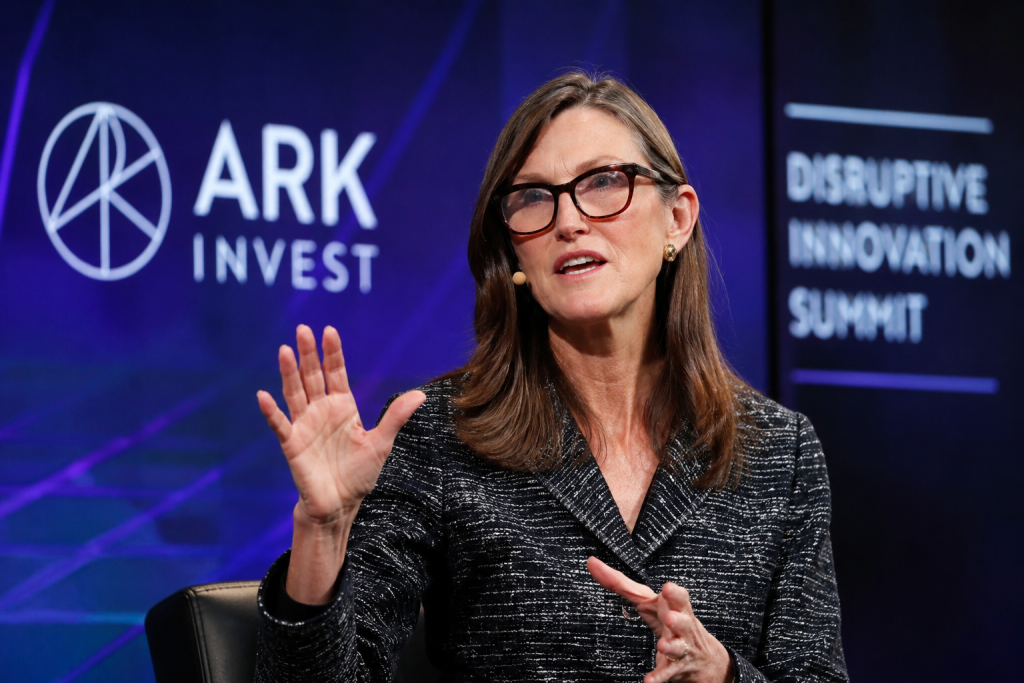
Cathie Wood’s Ark Innovation Fund (ARKK) ETF stock has remained inside a narrow range in the past few months. ARKK has remained between the support and resistance levels at $72.68 and $82.35 since April. It has risen by 9% in the last 12 months, while the Nasdaq 100 Index has soared by 28%.
ARKK has dropped by 1.82% this year, while the index has jumped by 15.90%, meaning that it is not participating in the ongoing artificial intelligence (AI) boom.
So, with the ongoing underperformance, what is the need for paying a hefty fee of 0.75% for a fund that continues to underperform the broader market, considering that the Vanguard S&P 500 ETF (VOO) charges just 0.03%?
ARKK ETF vs QQQ YTD performance | Source: TradingView
ARKK ETF has underperformed as key companies have slipped
The Ark Innovation Fund stock has underperformed the broader market this year. Tesla, the biggest constituent company, has dropped to $375, from the all-time high of $500 as the company faces some major challenges.
Valuation concerns remain, with the company trading at a forward price-to-earnings ratio of 185. It is also facing substantial competition pressure from the likes of Nio, BYD, XPeng, and Li Auto.
Tempus AI, the second-biggest constituent company, has dropped by over 50% from its highest level last year, while CRISPR Therapeutics (CRSP) has plunged by 32% in the same period.
Robinhood stock has dropped by 36%, while Shopify has slumped by 35% from its highest point last year. SpaceX, which went public recently, has crashed by over 30% from its all-time high and the downtrend is continuing.
Other top companies in the ARKK ETF, like Coinbase, Circle Internet, Roblox, Palantir, and CoreWeave, have all slumped from their highest points last year.
Coinbase and Circle have dropped because of the ongoing crypto market sell-off that has affected Bitcoin and most altcoins. COIN’s volume has continued falling, while the USDC market capitalization has dropped from a record high of $80 billion to $74 billion today.
Ark Innovative ETF lacks an edge vs peers
ARKK has a long history of underperforming the benchmark ETFs. For example, it has dropped by 35% in the last five years, while the Nasdaq 100 Index has jumped by 103%. In other words, $10,000 invested in this fund would now be worth $6,500. A similar amount invested in the Nasdaq 100 Index would be worth $20,300 today, excluding dividends.
To be clear: ARKK ETF regularly outperforms the Nasdaq 100, especially when Tesla is in a strong rally. However, in the long-term, history suggests that it always lags behind the broader market. ARKK has jumped by 275% since its inception, while the Nasdaq 100 has jumped by 600% in the same period.
The other main risk to remember is that ARKK is not a cheap fund as it has an expense ratio of 0.75%, meaning that a $10,000 investment will cost you $75 a year. A similar amount invested in VOO and QQQM will cost you just $3 and $15 a year. These fees will always add up over time.
This means that ARKK’s investors are paying a hefty fee to underperform the market. This is also further evidence that active ETFs rarely beat passive ones. Data compiled by S&P Global shows that 90% of all active funds have underperformed the S&P 500 Index in the past 15 years.
The post What’s the point of investing in Cathie Wood’s ARKK ETF anyway? appeared first on Invezz