
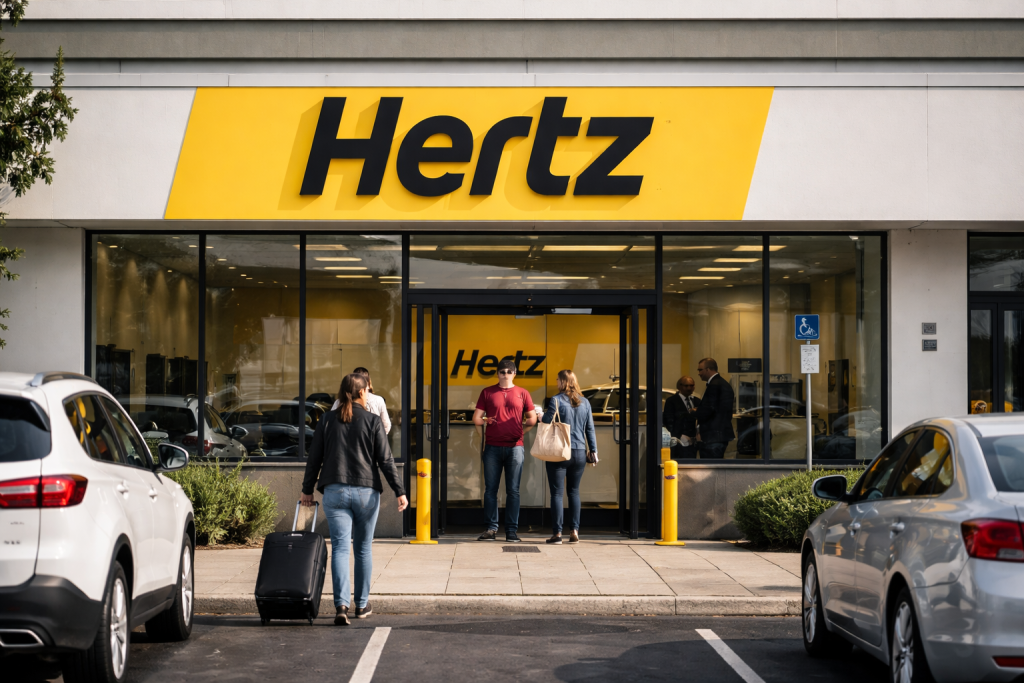
Hertz Global (NASDAQ: HTZ) is inching higher on April 7th after Cox Automotive confirmed its “Manheim Used Vehicle Value Index” hit the highest level last month since the summer of 2023.
According to the world’s largest automotive tech and services provider, its index that tracks prices of used vehicles sold at its US wholesale auctions was up 6.2% year-over-year in March.
This bounce in used car prices is a major tailwind for Hertz stock for two key reasons: depreciation costs and asset value. At its intraday peak, the car rental firm was seen trading at a “YTD” high of $5.95 on Tuesday.
Hertz stock to benefit lower depreciation per unit (DPU)
The single biggest expense for a rental company (after labour and fleet acquisition) is depreciation.
How it works: Florida-based Hertz Global buys a car for $30,000 and expects to sell it in a year for $22,000. That $8,000 difference is the “cost” of owning that car for the year.
The Impact: When used car prices rise, the resale value of their fleet goes up. If they can suddenly sell that same car instead for $25,000, their depreciation expense drops significantly.
Current Context: HTZ shares have struggled with high DPU (hitting around $330 per month) in 2026. Rising used car prices help them bring this number back toward their target of $300 or lower, which goes straight to the bottom line as profit.
Improved car sales margins to drive HTZ shares higher
HTZ is one of the largest used car retailers in the US. When wholesale and retail used car prices rise, the margins on their direct-to-consumer sales via Hertz Car Sales improve.
Higher prices allow them to “de-fleet” (sell off older cars) more aggressively without taking a loss. This is crucial as they continue to rotate their fleet to include more in-demand 2026 models.
Additionally, the Cox Automotive data is important because of the company’s struggles with EVs. Hertz took a massive hit in recent years because Tesla and other electric vehicle prices plummeted, destroying the resale value of its fleet.
If the broader used car market is lifting, it provides a “rising tide” that can help stabilize the residual value of the car rental firm’s remaining EV inventory, which has been a huge drag on Hertz shares.
Why Hertz is insulated from an increase in ‘new’ car prices
If used car prices are up, it usually means the entire automotive market is “hot” – and new cars are also getting more expensive.
However, for a rental giant like Hertz, the math doesn’t work like a 1:1 trade. The company actually benefits from this imbalance for one simple reason – it does not walk onto a dealer lot and pay the “sticker price” you see today.
It already secured their “Model Year 2026” buys at target prices months ago. Simply put, HTZ has already locked in the purchase price for its new additions.
Now that the used car prices are going up, they get to sell their old models for more than expected, while the cost of their incoming 2026 fleet remains fixed by their contracts with the OEMs.
This makes HTZ stock even more attractive to own in the current environment.
The post What to expect from Hertz stock as used car prices hit highs appeared first on Invezz