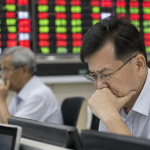

Asian equities found support from the one corner of the market investors are still reluctant to abandon: semiconductors.
Chipmakers rebounded on Thursday after several days of heavy selling, helping lift benchmarks in Japan and South Korea.
But the rally was not broad enough to erase the bigger macro risk. Oil jumped after renewed US-Iran hostilities, reviving inflation concerns and pushing bond yields higher.
The result was a split market as investors bought the AI dip, but stayed wary of the energy shock that could force central banks to keep policy tighter for longer.
Chip dip-buying steadies Asia
MSCI’s broadest index of Asia-Pacific shares outside Japan rose 0.8%, while Japan’s Nikkei climbed 2.3%, snapping a three-day losing streak.
South Korea’s KOSPI jumped 3.8%, led by a 3.6% rise in Samsung Electronics and a 7.5% surge in SK Hynix.
The rebound followed a modest recovery on Wall Street, where the Nasdaq managed a 0.2% gain despite early weakness.
Nvidia rose 3.6% after reports that China may allow leading AI firms to buy a limited number of its H200 chips, helping ease some concern over demand for advanced processors.
The move suggests investors still see value in the AI supply chain after this week’s selloff.
But conviction remains fragile, especially after Samsung’s strong earnings guidance failed to prevent profit-taking earlier in the week.
Oil shock revives inflation fears
The larger risk came from crude. Brent rose 0.8% to $78.65 a barrel and was up about 9% for the week, briefly trading above $80 for the first time since June 22.
Oil extended its rally after Trump said the interim agreement with Iran was “over” and US forces launched fresh strikes aimed at keeping the Strait of Hormuz open.
Trump later said he did not expect a return to full-scale war, which helped markets recover from session lows.
Still, the damage to the inflation outlook was clear. Higher energy prices hit bond markets and lifted expectations that the Federal Reserve may need to tighten again this year.
Bonds feel the pressure
Fed funds futures now imply 38 basis points of tightening this year, back near levels seen a week ago.
Minutes from the Fed’s June meeting showed several policymakers were already concerned about inflation, with some seeing a case for higher rates before agreeing to hold steady.
Bond yields climbed across markets. Japan’s 10-year yield rose to 2.880%, its highest since 1996, while Australia’s 10-year yield touched its highest level since early June.
The US 10-year yield added to overnight gains, rising to 4.5852%.
Currency moves were quieter. The dollar slipped 0.2% to 162.38 yen, still near levels that keep Japanese intervention risk alive.
The post Samsung, SK Hynix power Asia rebound while oil shock rattles bonds appeared first on Invezz